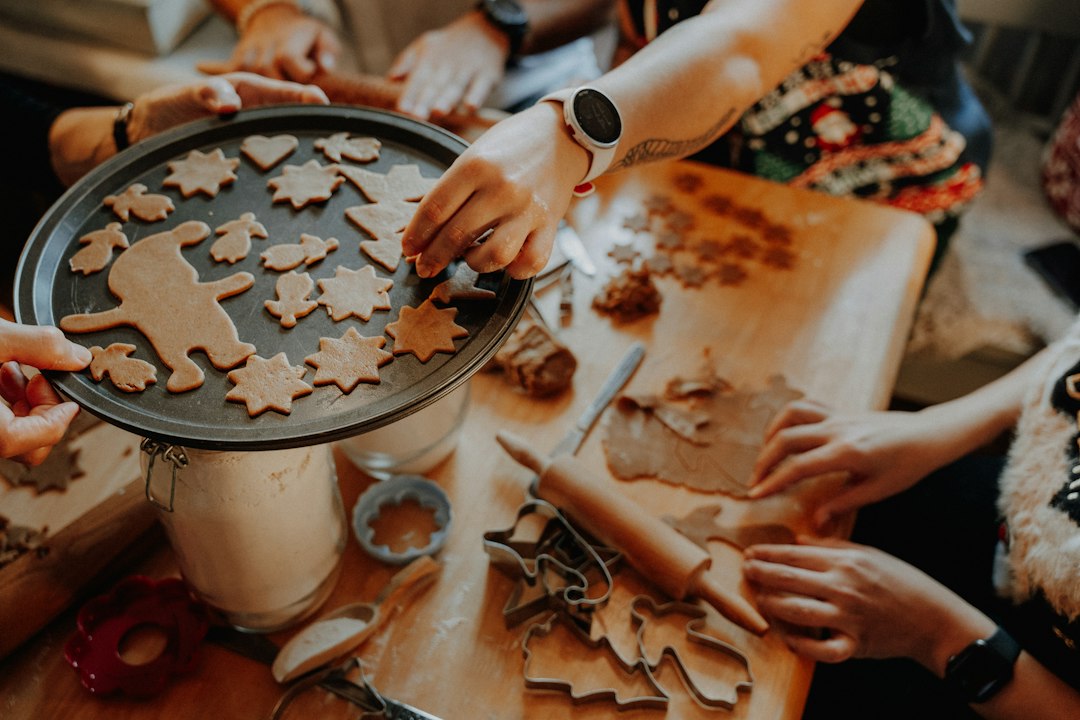
The best holiday baking afternoons rarely look perfect. There is flour on the counter, someone is searching for the right cutter, and the first tray may come out a little darker than planned. Yet those small imperfections are often what people remember. Making cookies together turns an ordinary afternoon into a shared project, one where every person can contribute something.
Choose a recipe that welcomes helpers
For a group, choose a dough that is forgiving and can be prepared ahead. Sugar cookies, gingerbread, shortbread, and simple drop cookies all offer different ways to participate. A dough that chills well is especially useful because it lets the host prepare one step before everyone arrives.
Think about the ages and confidence levels of the people joining in. Younger helpers can measure pre-portioned ingredients, press cutters, or add sprinkles. Older children and adults can roll dough, manage trays, or handle the oven. Everyone gets a job without needing to do every job.
Set up stations before the fun begins
A little preparation makes the afternoon more enjoyable. Clear the counter, line baking sheets with parchment, set out rolling pins and cutters, and place decorations in small bowls. Keep a damp cloth nearby for sticky hands and a separate space for cooling trays. If several people are working at once, give each person a small area rather than crowding around one bowl.
Read the recipe from beginning to end before starting. Check chilling and baking times, and make sure there is enough room in the refrigerator. These quiet preparations prevent the most common interruptions once the kitchen fills up.
Let decoration be personal
Not every cookie needs to look identical. Set out a few simple options—colored sugar, icing, chopped nuts, or chocolate—and let people choose how to finish their own batch. A small range of decorations is usually better than an overwhelming spread. It keeps the table manageable and gives each person room to be creative.
For a more polished finish, decorate only after cookies have cooled completely. Warm cookies can melt icing and make toppings slide. Use a cooling rack and work in batches so the process feels relaxed rather than rushed.
Keep the oven routine safe and simple
Assign one person to manage hot trays and oven timing. Use oven mitts, keep handles turned away from walkways, and avoid stacking hot baking sheets where someone might brush against them. While one tray bakes, the group can shape or decorate the next batch at the counter.
Make room for the stories
While dough chills or cookies cool, ask everyone about a favorite holiday treat or a baking memory. These conversations are part of the tradition. Save a few cookies for sharing, package some for neighbors, and keep a small assortment for the next day’s coffee break.
The best batch is the one you made together
A holiday cookie afternoon does not need elaborate recipes or a picture-perfect kitchen. Choose a manageable dough, prepare the workspace, share the jobs, and let the results be individual. The cookies will disappear, but the memory of making them together can return every year.
Plan the dough before guests arrive
For a relaxed gathering, make one dough the day before and chill it according to the recipe. If you want variety, prepare two doughs with different textures: a firm dough for cut-out shapes and a softer dough for drop cookies. Label containers with the baking temperature and approximate time so nobody has to search through a recipe while the oven is hot. Keep raw dough refrigerated between batches, especially if the room is warm.
Give each person a useful role
Groups work best when the jobs are clear. One person can portion dough, another can prepare trays, and someone else can handle decorations. Rotate roles if everyone wants a turn. If young children are helping, keep them away from the oven and let an adult handle hot pans, sharp tools, and any raw ingredients that need careful handling.
Make the finished cookies easy to share
Once the cookies are completely cool, sort them into small boxes or paper bags. Add parchment between layers so icing and decorations do not stick. If you are gifting them, include a short note about the flavors and any common allergens such as nuts, dairy, wheat, or eggs. Homemade treats feel even more thoughtful when the recipient knows what is inside.
Store different cookies the right way
Crisp cookies and soft cookies are best stored separately because moisture can move between them. Keep most cookies in airtight containers at room temperature, but follow the recipe’s guidance for fillings that contain fresh dairy or other perishable ingredients. Freeze undecorated cookies in a sealed container if you want to prepare ahead; thaw them before adding icing or delicate toppings.
Most importantly, keep the afternoon enjoyable. A slightly uneven edge or a sprinkle that lands in the wrong place is part of the charm. The shared process matters more than matching every cookie.
Choose a manageable number of cookie styles
Two kinds of cookies are usually enough for a relaxed afternoon. One cut-out dough creates the decorating activity, while a drop-cookie dough gives everyone a quicker bake to enjoy while the decorated cookies cool. If you want a third option, choose a slice-and-bake dough that can be prepared ahead and cut just before baking. This keeps the oven schedule predictable and avoids having several complicated projects competing for counter space.
Set expectations for timing
Cookie dough often needs chilling, and decorated cookies need time to cool and set. Tell helpers what can happen while the oven is busy: clean cutters, prepare the next tray, arrange cooling racks, or make gift labels. A simple timeline on a piece of paper can prevent everyone from asking when the next batch will be ready. Keep the pace relaxed and leave a little room for breaks.
Turn leftovers into thoughtful gifts
If you have more cookies than the household can eat, package small assortments for neighbors, teachers, or friends. Choose sturdy cookies for stacking and keep delicate decorations on top. Store crisp and soft varieties separately so one does not change the texture of the other. A handwritten note adds a personal touch and makes the afternoon’s work feel connected to the wider community.
These practical details help the gathering feel organized without taking away the spontaneous fun that makes shared baking memorable.