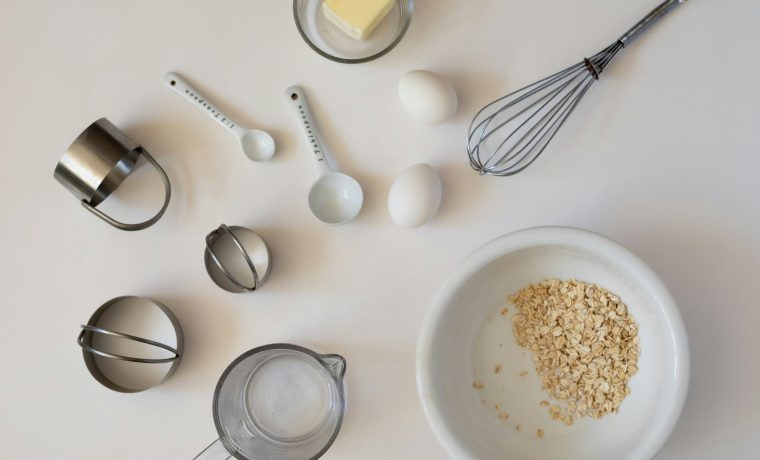
A well-equipped baking kitchen does not need every gadget in the store. A few dependable tools make a bigger difference than a drawer full of single-purpose accessories. The best setup helps you measure accurately, mix comfortably, transfer batter cleanly, and check when a bake is ready. Start with tools you will reach for every week, then add specialty equipment only when a recipe truly calls for it.
Invest in accurate measuring
A digital kitchen scale is one of the most useful tools for consistent baking. Flour can vary greatly in weight when measured by volume, depending on how it is scooped and packed. Weighing ingredients removes much of that uncertainty and makes it easier to repeat a successful recipe. Choose a scale with a clear display and a tare function so you can weigh several ingredients in one bowl.
Measuring spoons and liquid measuring cups are still useful, especially for small amounts of salt, leaveners, and liquids. Keep them clean and easy to reach.
Choose mixing bowls that work hard
A nesting set of stainless steel or glass bowls covers most mixing tasks. A large bowl gives dough room to move, while a smaller bowl is useful for whisking dry ingredients or holding measured components. A flexible silicone spatula is excellent for scraping batter from the sides, and a sturdy whisk handles eggs, sauces, and dry mixtures.
You do not need several electric mixers to begin. A hand mixer is helpful for whipped cream and some cake batters; a stand mixer is a convenience for frequent bread or cookie baking, not a requirement for every home baker.
Make pans match the recipes you bake
A rimmed sheet pan, a standard loaf pan, a 9-inch round cake pan, and a pie plate cover a surprising number of recipes. Choose sturdy pans that sit flat and distribute heat reasonably evenly. Dark pans brown more quickly than light-colored pans, so pay attention to the pan specified in the recipe.
Parchment paper is a small purchase that makes cleanup easier and helps cookies release cleanly. A cooling rack is equally useful because it lets air circulate around baked goods and prevents the bottoms from becoming damp.
Keep a few simple checking tools
An instant-read thermometer can help with bread, custards, and other recipes where doneness is not obvious. An oven thermometer is useful if you suspect your oven runs hot or cool. A timer, bench scraper, and offset spatula can also earn their place through repeated use.
Skip the clutter until you need it
Novelty cutters, elaborate decorating kits, specialty pans, and single-use gadgets can be fun, but they are not the foundation of a useful baking kitchen. Borrow or buy one only when you have a recipe in mind. Store tools where they are easy to find and remove duplicates that do not improve your results.
Build the kit around your habits
If you bake bread every weekend, a scale and dough scraper may be more valuable than a cake turntable. If cookies are your regular bake, sheet pans, parchment, and a scoop may matter most. Start with the basics, learn what your recipes demand, and let your kitchen grow naturally. A smaller collection of reliable tools often makes baking feel simpler and more enjoyable.